Features

Purpose-built. Research-backed. For Students and Parents.

Missing work first, with a student's own done marks

Teacher-marked Missing work is always at the top, with the class and due date. If work was handed in on paper, the student can mark it as turned in: it's crossed out where it is and counts as done for the week. Only students can do this, and it's a note for themselves; it doesn't submit anything. Earlier work that's still waiting for a grade is listed under “Submitted, not graded yet”.

What the research says

Specific information about missing assignments is what made the parent alerts work.[1] Feedback helps most when it's about the task and what to do next.[5]

What we avoid, and why

A plain zero is never called Missing, because only the teacher's Missing mark counts. Marks never notify anyone. Feedback that turns attention to the person (“you're behind”) instead of the task often makes things worse.[6]
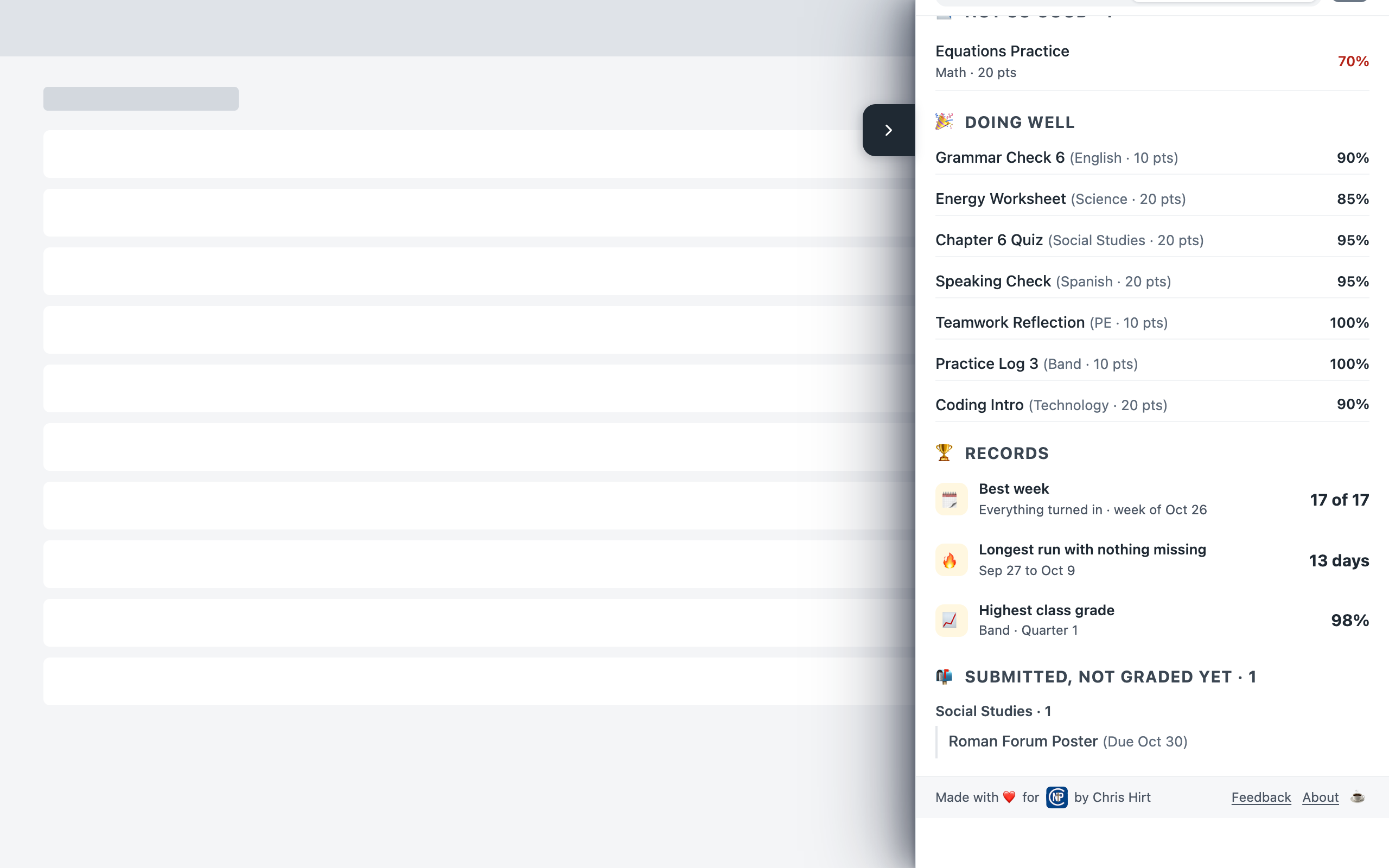
Submitted, not graded yet: work that was turned in and is still waiting for a grade.

Due today and tomorrow

A short list of what's due in the next two days, so tonight's plan is obvious.

What the research says

Children given near, concrete goals made faster progress and built more confidence and interest than children given one distant goal.[8] Deciding when and where to do something makes people much more likely to follow through.[9]

What we avoid, and why

There are no countdown timers, red alarms or reminders every hour, just the list.

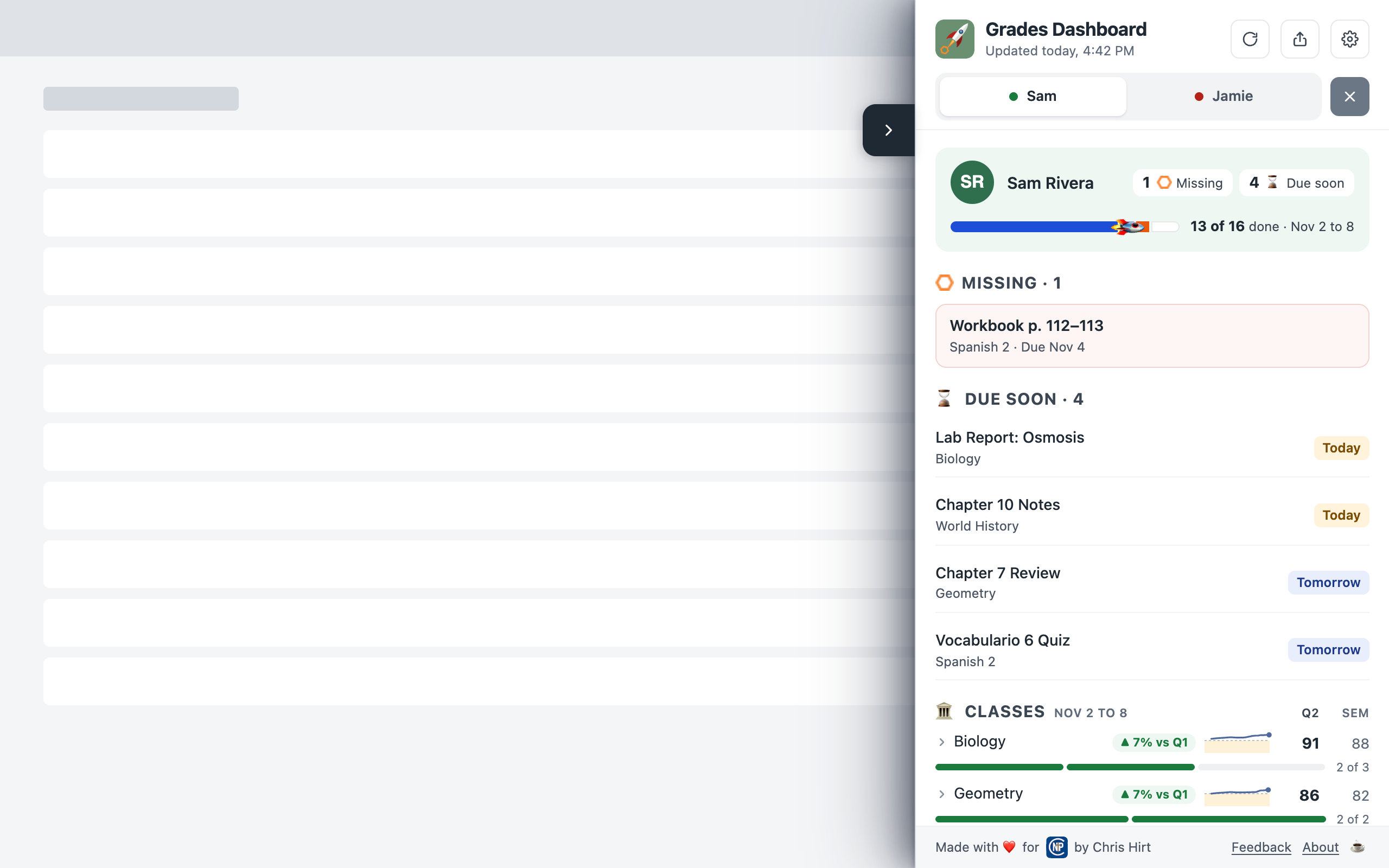
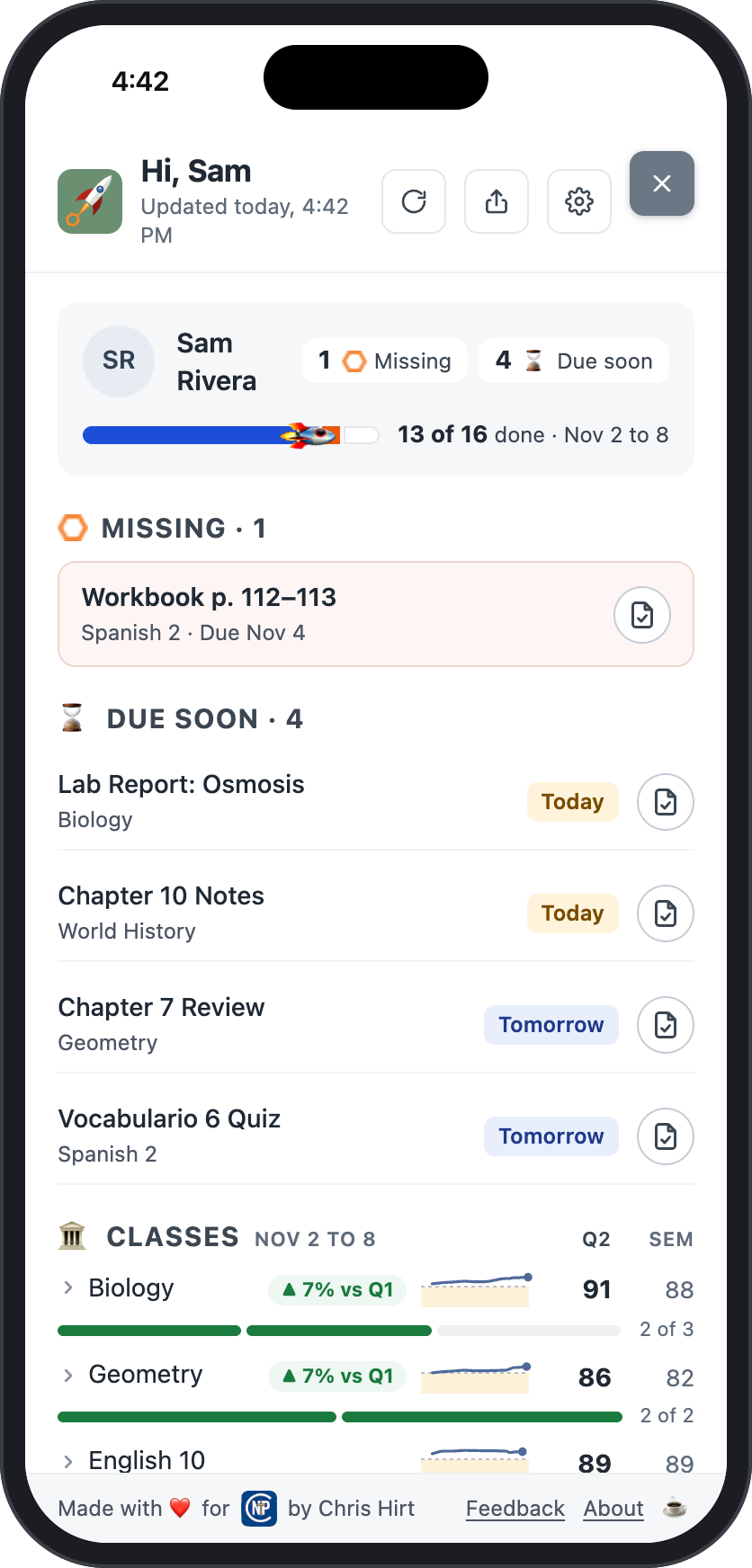
Sam's view on a phone: 1 thing to finish first, then 2 items due today and 2 tomorrow.

This week's progress

A bar along the bottom of the name card fills as this week's assignments are graded (dark blue) or turned in and waiting for a grade (light blue). Missing work shows in orange. It starts fresh every Monday.

What the research says

Watching progress toward a goal helps people reach it, more so when the progress is recorded where they can see it.[7] A week is a near goal that's always within reach.[8]

What we avoid, and why

Streaks that reset to zero backfire. When a streak breaks, people often give up instead of starting again, especially when they blame themselves.[11] The bar is a fresh goal each week, so there's nothing to lose.

Sam Rivera: GO, 1 missing, 4 due soon, and 13 of 16 assignments done this week.

Up since last quarter

When a class grade is higher than last quarter, a small “▲ 7% vs Q1” appears beside it. When it's lower, nothing appears.

What the research says

Comparing yourself with your own past (personal bests) goes with more engagement and effort.[12] Feedback about progress on the task works best.[5]

What we avoid, and why

Drops don't get a red arrow. Feedback that pulls attention to the self (“your grade dropped”) lowered performance in over a third of the studies in a large review.[6] The passing line and the class bar still show where things stand.

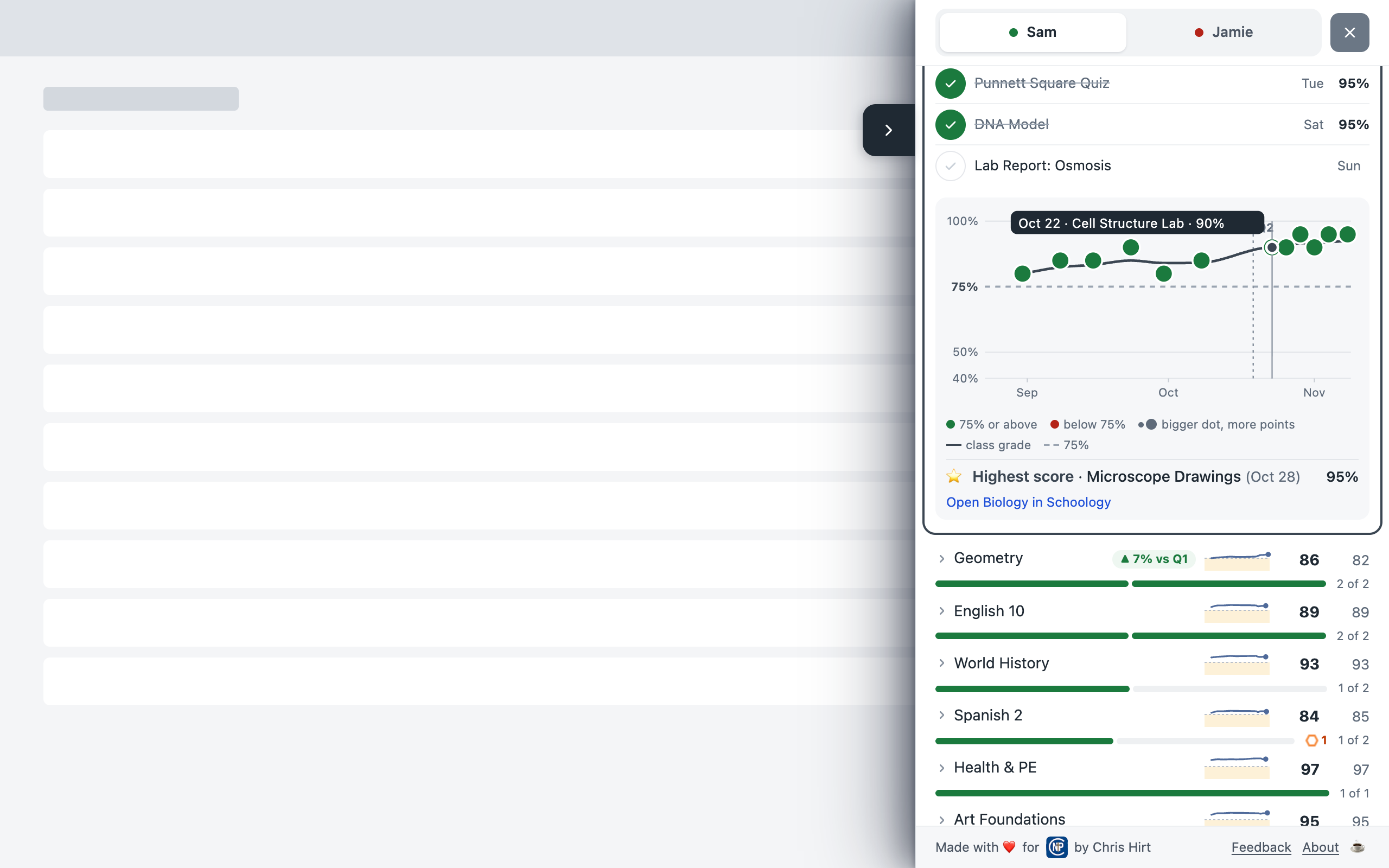
Biology up 7% since Quarter 1, with the class grade drawn over time against the 75% line.

Records: personal bests that only go up

Highest score, best week, longest run with nothing missing, and highest class grade this school year. Records are saved, so a rough week never takes one away.

What the research says

Personal-best goals, measured against your own past rather than other people, predict more engagement over time.[12] Praise works when it's about effort and specific work, not about being smart.[13]

What we avoid, and why

There are no points, coins, levels or leaderboards. Rewards tied to finishing tasks can crowd out students' own motivation, more so for children.[4],[10] In one semester-long study, a course with badges, a leaderboard and coins ended with lower motivation and exam scores.[14] Dashboards that compare students with each other push competition over learning,[15] so there's never a ranking, and never a side-by-side of siblings.

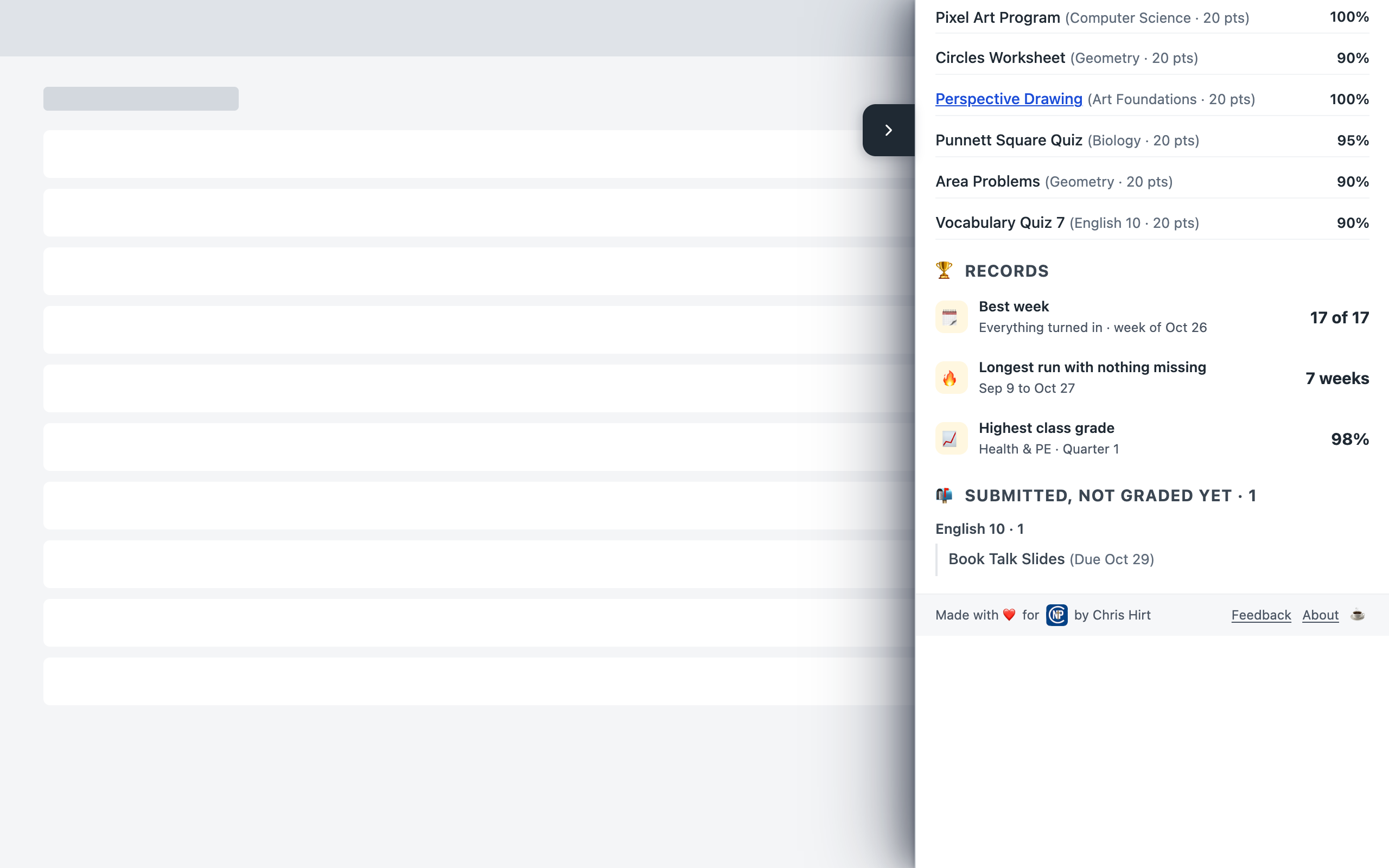
Records: best week 16 of 16, 7 weeks with nothing missing, highest class grade 98%.

Doing well

Recent graded work above the family's “doing well” level, so there's always something specific to notice and praise.

What the research says

Praising effort and specific work builds motivation; praising intelligence undermines it.[13] Positive, informative feedback raised children's own interest in a task.[4]

What we avoid, and why

It never shows generic cheerleading. It names the actual work (“Pixel Art Program, 100%”), which gives a parent something real to say.

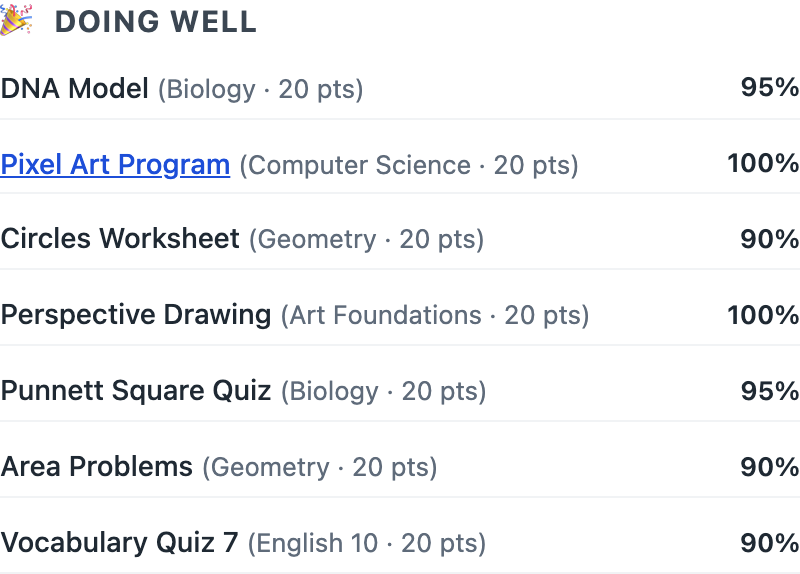
Doing well for Sam: recent graded work such as DNA Model (Biology) 95% and Pixel Art Program (Computer Science) 100%.

Family rules you set together

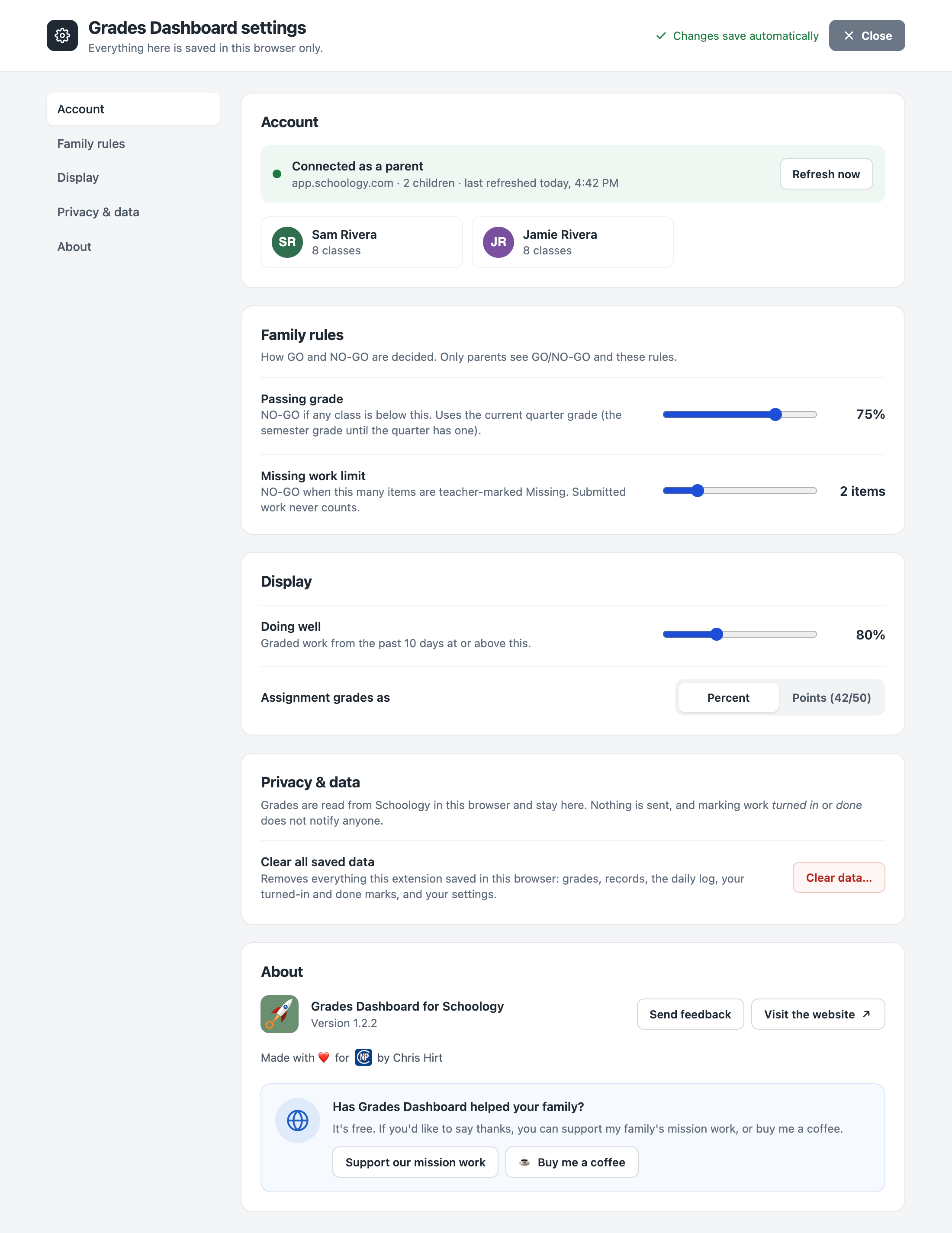
Three sliders: the passing grade (60–80%), the missing-work limit (1–6) and the “doing well” level (75–90%). GO/NO-GO can be switched off.

What the research says

Clear structure from parents, together with support for the student's independence, goes with better self-regulation and school results.[3],[10] Setting rules is the kind of homework involvement most linked to achievement.[2]

What we avoid, and why

Rules are meant to be agreed on, not imposed. Students see the same information, and there are no hidden thresholds.

The settings page: passing grade 75%, missing work limit 2 items, doing well 80%.

The extension itself hasn't been studied. It's built on research about what helps, and what to avoid.

Has Grades Dashboard helped your family?

It's free. If you'd like to say thanks, you can support my family's mission work, buy me a coffee, or send me an encouraging note.